
South Carolina DUI Records
South Carolina DUI records are public documents held by multiple state agencies, including the courts, the South Carolina Law Enforcement Division, and the Department of Motor Vehicles. These records cover arrests, convictions, license actions, and related case details for DUI offenses across all 46 counties. You can search South Carolina DUI records online through the SC Courts Public Index, request a criminal history from SLED, or pull a driving record from SCDMV. This guide explains where the records are kept, how to find them, and what each source provides.
South Carolina DUI Records Quick Facts
Where to Find South Carolina DUI Records
South Carolina DUI records are spread across several agencies depending on what you need. Criminal conviction records are held by SLED, the South Carolina Law Enforcement Division. Court case records, including charges and dispositions, are available through the SC Judicial Branch and its online Public Index. Driving records that reflect DUI convictions, license suspensions, and ignition interlock requirements are maintained by the South Carolina Department of Motor Vehicles. Each source provides a different slice of the full picture, so knowing which one to use matters.
The SC Courts Public Index Portal is often the best starting point for a court-based search. It covers records from the Court of General Sessions for felony DUI cases and from Magistrate and Municipal Courts for misdemeanor charges. You can search by defendant name, case number, or attorney name. The system shows case dockets, hearing dates, and dispositions at no cost. For certified copies of documents, you will need to contact the Clerk of Court in the county where the case was filed.
The SC Code of Laws, Title 56, Chapter 5 governs all DUI offenses in South Carolina. Understanding the statutes helps you interpret what you find in the records.
The screenshot below is from the SC State House website, which hosts the full text of South Carolina's DUI statutes under Title 56 of the Code of Laws.
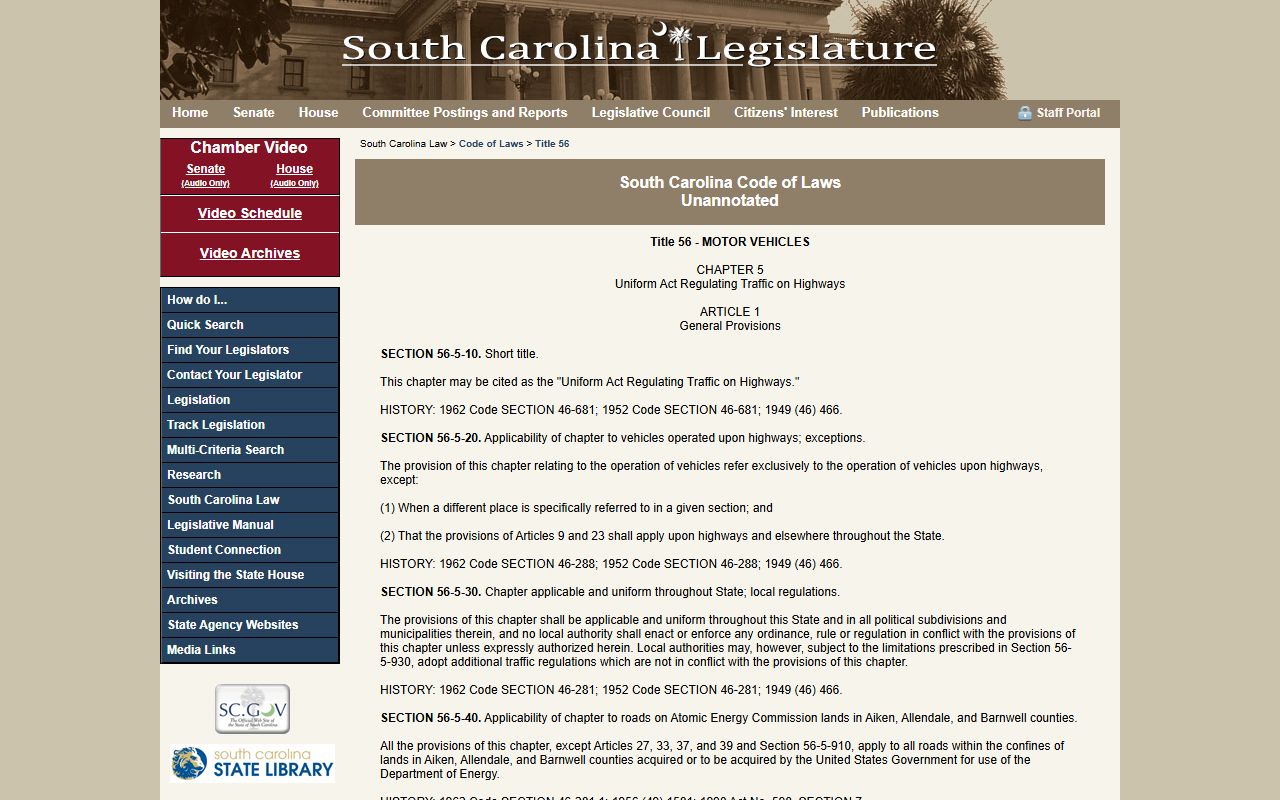
Reviewing the statute text helps you understand what charges and penalties appear in DUI case records across South Carolina.
SLED Criminal Records and DUI Convictions
The South Carolina Law Enforcement Division serves as the central repository for criminal history records in the state. SLED conducts criminal records checks that include DUI convictions as part of a person's full criminal history. To request a check, you provide the subject's full name, date of birth, and Social Security number if available. SLED charges a fee for these checks, and results typically come back within a few business days.
SLED also operates the South Carolina Incident Based Reporting System, known as SCIBRS. This system collects data on criminal incidents across every jurisdiction in South Carolina, including DUI arrests and related offenses. The data feeds into statewide statistics on impaired driving enforcement. SLED coordinates with local agencies to ensure records flow into the central system accurately.
The image below is from the SLED website, which provides access to criminal records checks and background history information for South Carolina.
SLED's criminal records system is one of the most direct ways to confirm whether a DUI conviction appears in a person's South Carolina criminal history.
SLED also works with the courts to manage the expungement process in South Carolina. If a DUI record has been expunged, SLED and the Department of Motor Vehicles keep a nonpublic record of the offense to prevent a person from claiming expungement rights more than once. Expunged DUI records are not available through standard public searches.
Note: SLED criminal records checks reflect convictions statewide, but they may not include pending charges or cases still moving through the South Carolina court system.
SCDMV Driving Records for DUI in South Carolina
The screenshot below is from the SCDMV website, where drivers can request their official driving record and find information about DUI-related license actions in South Carolina.
The SCDMV driving record is a key document for confirming DUI convictions, license suspensions, and ignition interlock requirements tied to a specific driver in South Carolina.
The South Carolina Department of Motor Vehicles maintains a driving record for every licensed driver in the state. These records show traffic violations, DUI convictions, license suspensions, and ignition interlock status. You can request a driving record online, by mail, or in person at an SCDMV branch. You will need the driver's license number and must pay a fee to obtain the record.
The SCDMV also handles the administrative side of DUI enforcement. When a driver refuses a breath or blood test under South Carolina's implied consent law, the arresting officer submits an Alcohol and Drug Test Report to the SCDMV. This triggers an administrative license suspension separate from any criminal court process. Drivers have the right to request an administrative hearing to challenge the suspension within the required timeframe.
Reinstatement after a DUI suspension requires more than just paying a fee. Drivers must complete the Alcohol and Drug Safety Action Program, known as ADSAP, and install an ignition interlock device before the SCDMV will restore driving privileges. The SCDMV tracks interlock compliance as part of the reinstatement process in South Carolina.
SC Courts Public Index and DUI Records
The South Carolina Judicial Branch provides public access to court records through the Public Index portal at publicindex.sccourts.org. This tool lets you search DUI records by entering a name or case number and selecting the county. Results show the case type, filing date, charges, and current status. The system covers all levels of court, including General Sessions for felonies and Magistrate or Municipal Courts for misdemeanor DUI cases.
The image below is from the SC Judicial Branch website, which provides access to court records and the Public Index search tool for South Carolina.
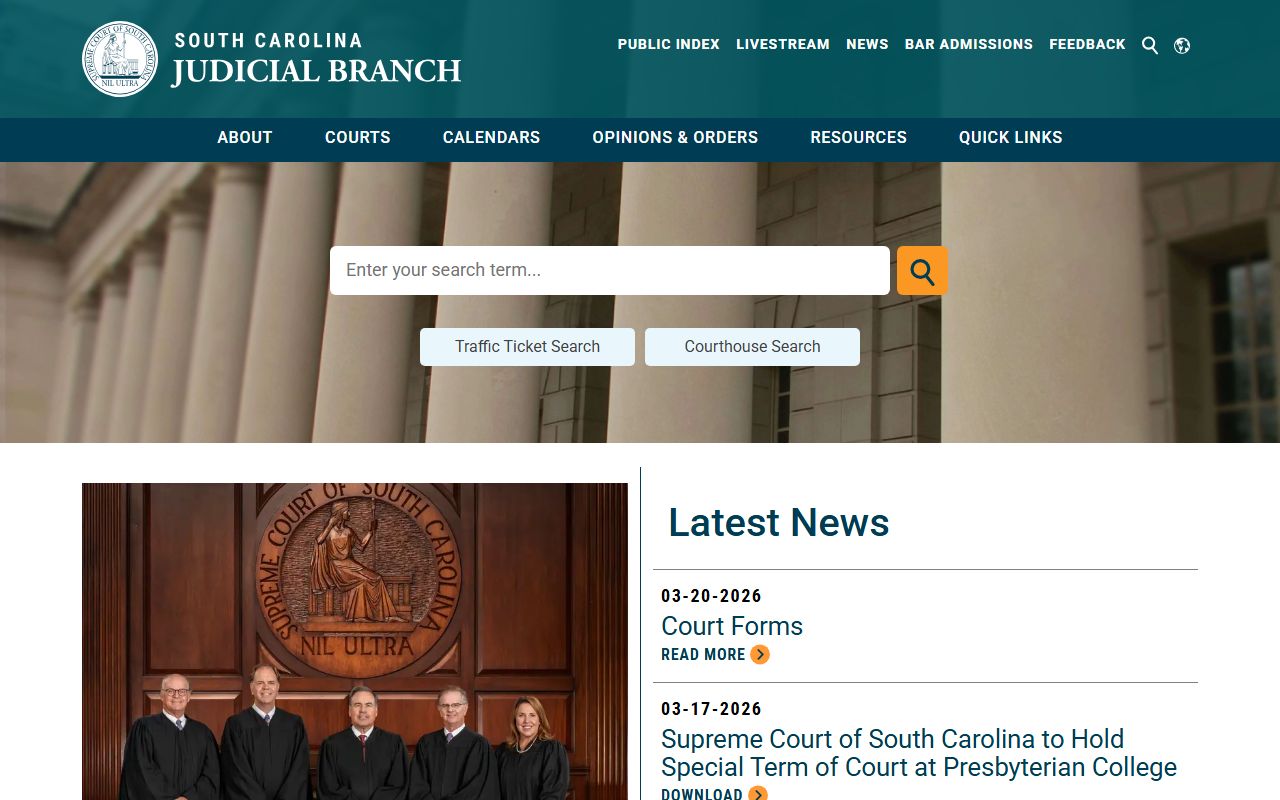
The SC Judicial Branch Public Index is a free, searchable tool that covers DUI case records from all 46 counties in South Carolina.
Searching the Public Index is free, but getting copies of actual filed documents requires contact with the Clerk of Court. Most clerks accept requests in person or by mail. Fees apply for copies, and certified copies cost more than plain ones. If the case was sealed or the record was expunged, those documents will not appear in the public search results in South Carolina.
Note: The Public Index shows case-level information, not full document text, so you may still need to visit the courthouse to review the complete file for a South Carolina DUI case.
South Carolina DUI Laws and Statutes
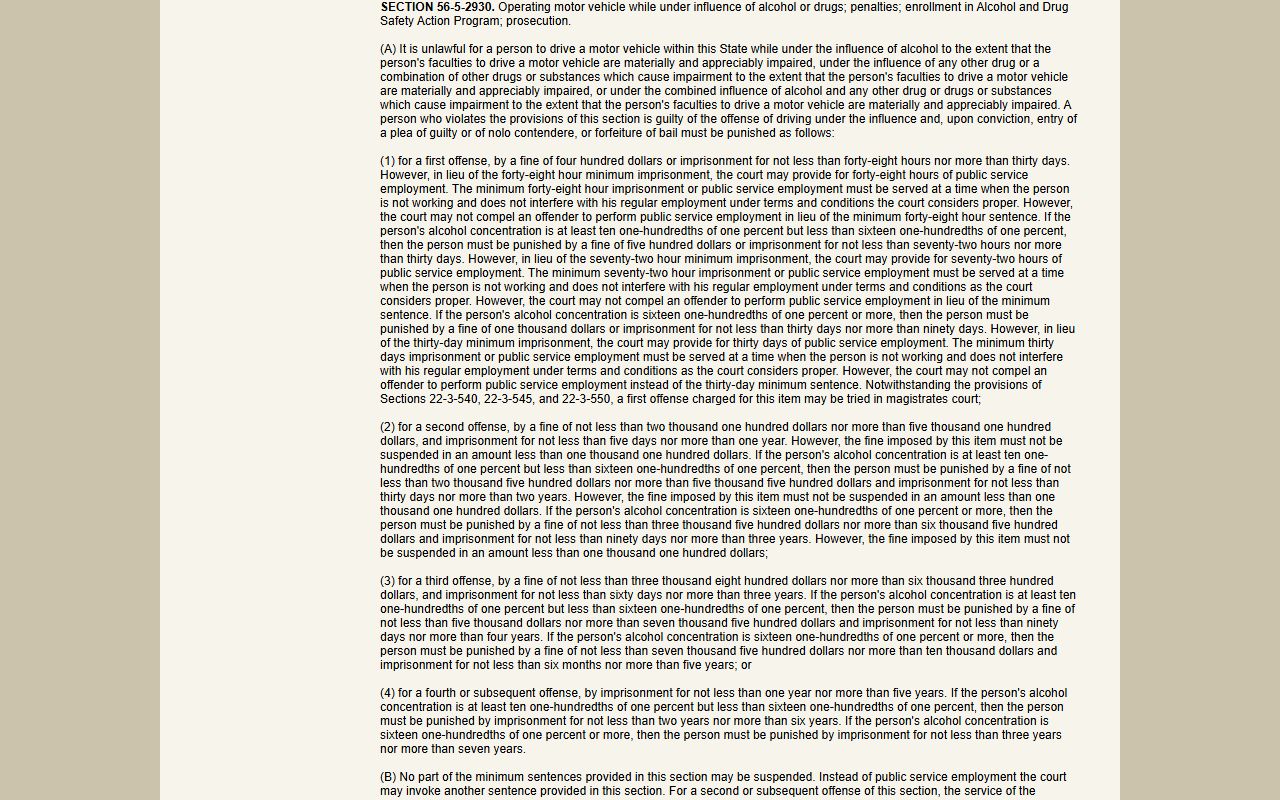
South Carolina defines driving under the influence under S.C. Code Ann. § 56-5-2930. The law makes it illegal to operate a motor vehicle while materially and appreciably impaired by alcohol, any drug, or a combination of substances. Impairment is the central test under this statute, meaning an officer must show that the person's ability to drive was clearly affected.
A separate offense exists under § 56-5-2933, called Driving with an Unlawful Alcohol Concentration, or DUAC. This is a per se offense, meaning no proof of actual impairment is needed. If a person's blood alcohol concentration is 0.08% or higher at the time of driving, the charge applies. This matters for how records look: a DUAC conviction reflects a BAC-based finding, while a DUI conviction reflects an impairment-based finding. Both appear in South Carolina criminal and driving records.
The screenshot below is from the SC State House website showing the text of § 56-5-2930, the primary DUI statute in South Carolina.
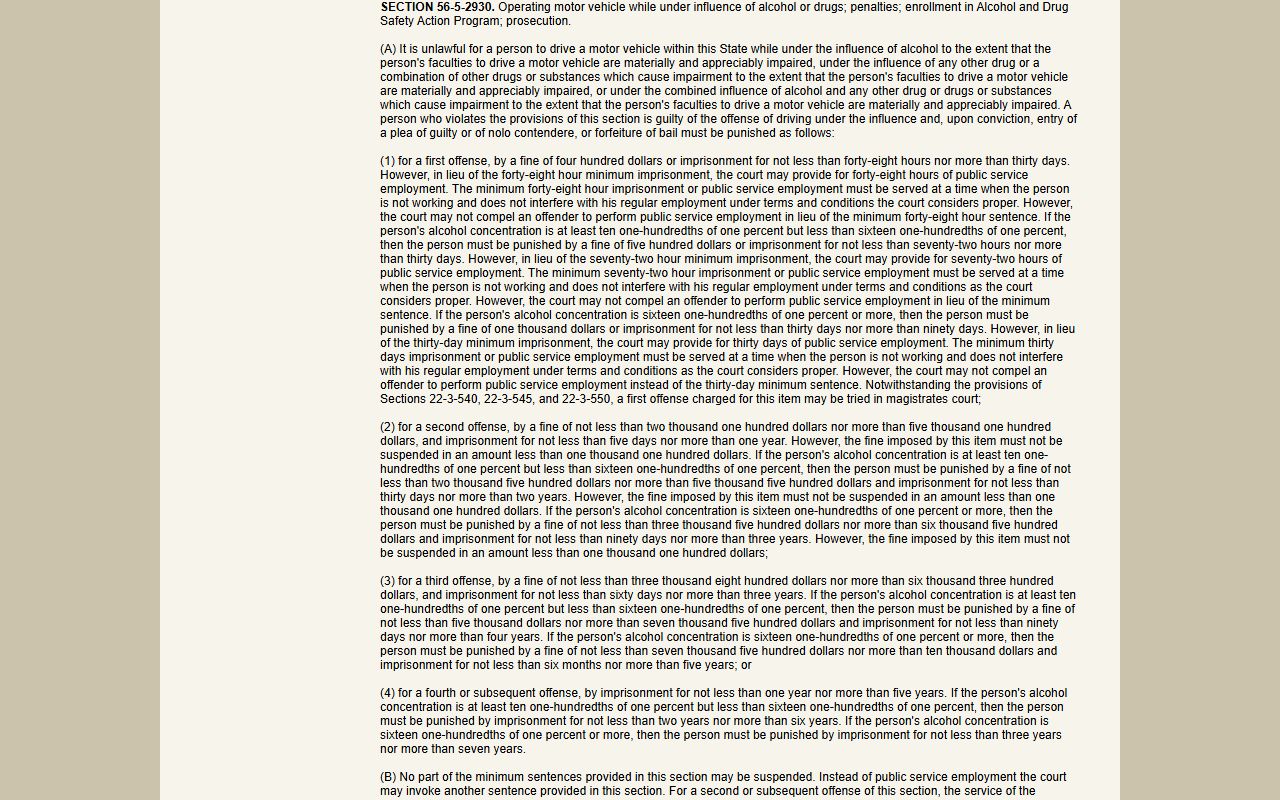
Reading the statute helps you understand exactly what conduct leads to a DUI charge and what gets recorded in South Carolina's criminal history systems.
DUI Penalties in South Carolina
Penalties for DUI in South Carolina depend heavily on the blood alcohol level at the time of the offense and whether the person has prior convictions. For a first offense where BAC falls between 0.10% and 0.16%, the penalty is a $500 fine or imprisonment from 72 hours to 30 days. When BAC is 0.16% or higher on a first offense, the fine rises to $1,000 and the jail term runs from 30 to 90 days. The court can substitute public service work for the minimum jail time but cannot force a person to take that option instead of serving the minimum sentence.
Felony DUI is handled under § 56-5-2945 of the South Carolina Code. When impaired driving causes great bodily injury, a conviction carries up to 15 years in prison. When a death results, the sentence can reach 30 years. The law defines great bodily injury as harm that creates a real risk of death, causes lasting physical damage, or leads to the loss of use of a body part or organ. These cases generate both criminal court records and SCDMV license revocation records in South Carolina.
South Carolina's implied consent law under § 56-5-2950 adds another layer of consequences. All drivers in South Carolina are deemed to have consented to chemical testing when arrested for DUI. Refusing a breath, blood, or urine test triggers an automatic 6-month license suspension, separate from any criminal penalty. The arresting officer must give a written advisory explaining the right to refuse and the consequence of doing so.
The list below covers key penalty thresholds tied to BAC and offense history under South Carolina DUI law:
- First offense, BAC 0.10-0.16%: $500 fine or 72 hours to 30 days jail
- First offense, BAC 0.16%+: $1,000 fine or 30 to 90 days jail
- Implied consent refusal: 6-month license suspension
- Felony DUI with great bodily injury: up to 15 years prison
- Felony DUI causing death: up to 30 years prison
- Fourth or later offense: lifetime ignition interlock requirement
Ignition Interlock Requirements in South Carolina DUI Records
South Carolina requires ignition interlock devices for all DUI convictions under § 56-5-2941. The device prevents a vehicle from starting if the driver has consumed alcohol above the calibrated threshold. It must be installed on every motor vehicle the person drives, with exceptions for mopeds and motorcycles. The SCDMV administers the Ignition Interlock Device Program and tracks whether drivers comply with installation and monitoring requirements.
The image below is from the SC State House website showing the text of § 56-5-2941, which sets out South Carolina's ignition interlock requirements for DUI convictions.
Ignition interlock records are part of the SCDMV file for any driver who has been convicted of DUI in South Carolina.
The length of time a device must remain installed depends on how many DUI offenses a person has. A first offense requires 6 months. A second offense requires 2 years. A third offense requires 3 years. A fourth or later offense carries a lifetime requirement. If the SCDMV determines that a medical condition makes the device inoperable for a particular driver, it may waive the interlock requirement, but the driver's license is then suspended for the same period the device would have been required. There is no shortcut around the interlock or the suspension in South Carolina.
Note: Ignition interlock completion and compliance records are kept by the SCDMV and can appear in a South Carolina driving record request alongside the DUI conviction itself.
Public Access and FOIA for South Carolina DUI Cases
DUI records in South Carolina are public under the South Carolina Freedom of Information Act, found in Title 30, Chapter 4 of the state code. Any person can request access to government records, including DUI arrest records, incident reports, and court case files. You do not need to be a party to the case or show a legal reason for the request. Agencies may charge reasonable fees for copying and search time, but cannot deny access simply because you did not explain why you want the records.
To submit a FOIA request for South Carolina DUI records, write to the agency that holds the specific records you need. State the records you want with enough detail that the agency can locate them. Include your contact information for the response. Agencies must respond within specific legal deadlines. If a request is denied, the agency must explain the reason, and you have the right to challenge the denial.
Some DUI records are exempt from disclosure. Records tied to an ongoing investigation, certain law enforcement materials, and records that would invade personal privacy in an unreasonable way may be withheld. Court records that have been sealed or expunged also fall outside what FOIA can reach in South Carolina. Conviction records, however, are generally available to any member of the public.
The South Carolina Department of Public Safety oversees the SC Highway Patrol, which handles traffic enforcement including DUI stops on state roads. Incident reports and traffic collision records from SCDPS are also accessible through FOIA requests in South Carolina.
How to Request DUI Records in South Carolina
Requesting South Carolina DUI records involves choosing the right agency for what you need. Each source requires different information and serves a different purpose.
For a criminal history that includes DUI convictions, contact SLED directly. You will need the subject's full name, date of birth, and Social Security number if available. SLED processes requests and returns results that cover the full criminal history on file in South Carolina. The fee varies depending on the type of check requested.
For court records on a specific DUI case, use the SC Courts Public Index to find the case number and county. Then contact the Clerk of Court in that county to order copies of the case file documents. Most clerks handle requests in person or by mail. Bring the case number and the names of the parties. Fees apply per page for copies, with higher rates for certified documents.
For a driving record that shows DUI convictions and license history, submit a request to the SCDMV online, by mail, or in person at an SCDMV branch. You will need the driver's license number. Fees apply, and the resulting record will show violations, suspensions, and ignition interlock status tied to that driver in South Carolina.
The steps below summarize the main ways to request South Carolina DUI records:
- SLED criminal records check: submit name, DOB, and SSN; pay the required fee
- Public Index court search: search by name or case number at publicindex.sccourts.org
- SCDMV driving record: request online, by mail, or in person with driver's license number
- FOIA request: submit a written request to the agency holding the records
- In-person courthouse visit: contact the Clerk of Court in the county where the case was filed
Note: Processing times vary by agency and request volume, so plan ahead if you need South Carolina DUI records for a time-sensitive purpose.
Browse South Carolina DUI Records by County
Each of South Carolina's 46 counties maintains its own court records for DUI cases filed in that jurisdiction. Select a county below to find local resources and DUI record information for that area.
Browse DUI Records by South Carolina City
DUI cases filed in cities across South Carolina are handled by the county court where the city is located. Choose a city below to find DUI record resources in that community.